
Unlock favorable odds: a philosophical guide to casino probabilities
The Illusion of Control in Gambling
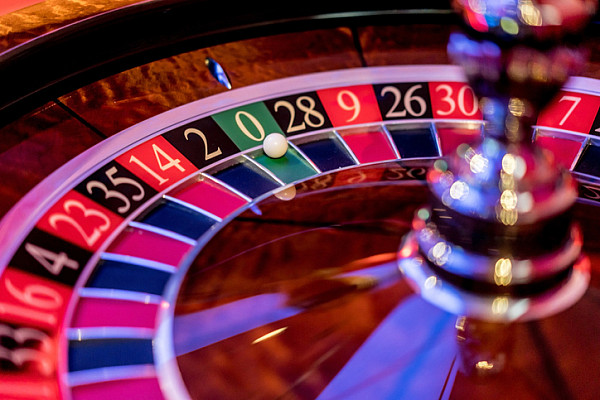
The allure of gambling often stems from a deep-seated human desire to influence outcomes, to believe that skill or strategy can overcome the inherent randomness of chance. This philosophical inclination towards control is particularly evident in casino settings. Players often develop rituals, lucky charms, or betting systems, all in an attempt to exert some dominion over the unpredictable nature of games like roulette or blackjack. This pursuit of control, while understandable, often masks the underlying probabilities that govern every wager, and it’s here that understanding resources like plexian play can be beneficial.
From a philosophical standpoint, the concept of agency versus determinism plays a significant role. In gambling, the player experiences a sense of agency through their decisions – where to place a bet, how much to wager, or which card to draw. However, the actual outcome is largely predetermined by mathematical probabilities and the mechanics of the game. This dichotomy between perceived control and mathematical certainty is a core element of the gambling experience, leading to both exhilarating wins and crushing losses.
Understanding Expected Value in Casino Games
At the heart of casino probabilities lies the concept of expected value (EV). This is a long-term average of what a player can expect to win or lose on a particular bet. In virtually all casino games, the expected value is negative for the player. This means that, over an infinite number of plays, the house will always have an advantage, and the player is statistically destined to lose money. Understanding EV is not about predicting individual outcomes but about grasping the fundamental mathematical disadvantage inherent in most wagers.
Philosophically, recognizing negative EV can lead to a more grounded approach to gambling. Instead of chasing elusive “favorable odds,” one can view gambling as a form of entertainment, where the cost of that entertainment is the expected loss. This perspective shifts the focus from winning to enjoying the experience, acknowledging that the odds are, by design, stacked against the player in the long run. It’s about informed participation rather than a misguided belief in guaranteed riches.
The Psychology of Risk and Reward
The human brain is wired to respond to risk and reward. Casinos expertly leverage this by creating an environment that amplifies these psychological triggers. The thrill of a potential win, however small the probability, can override rational decision-making. This is further compounded by the intermittent reinforcement schedule, where wins occur unpredictably, making the behavior of gambling highly addictive. The dopamine rush associated with a win, even a small one, reinforces the desire to continue playing.
Philosophically, this highlights the tension between our evolutionary drives and the structured environments of modern casinos. Our innate attraction to risk and reward, honed for survival in a less predictable world, is exploited in a setting where outcomes are meticulously calculated. Recognizing these psychological vulnerabilities is crucial for responsible gambling. It allows individuals to differentiate between genuine enjoyment and the compulsive pursuit of a fleeting reward that is mathematically unlikely to materialize consistently.
Navigating Probabilities with Responsible Play
Responsible gambling is not about beating the odds, as they are fundamentally in favour of the house. Instead, it’s about engaging with casino probabilities from a position of awareness and control over one’s own behaviour. This involves setting strict limits on time and money, understanding the specific probabilities of the games being played, and never chasing losses. It means treating gambling as a form of leisure, with a predetermined budget for entertainment.
The philosophical underpinnings of responsible play emphasize a stoic acceptance of outcomes, both good and bad. It’s about maintaining inner equilibrium, regardless of external fortune. This approach fosters a healthier relationship with gambling, where the focus is on the experience and the social aspect, rather than a desperate attempt to manipulate probabilities. It acknowledges that while we cannot control the cards or the spin of the wheel, we can always control our own actions and decisions.
Plexian Play: Fostering Informed Engagement with Casino Dynamics
Organizations like Plexian Play play a vital role in promoting a more philosophical and informed approach to the world of gambling. By focusing on education and community, they aim to equip individuals with the knowledge and understanding necessary to navigate casino probabilities responsibly. This includes demystifying the mathematics behind games and highlighting the psychological factors that influence player behaviour. Plexian Play champions a perspective where entertainment is prioritized over the unrealistic pursuit of guaranteed wins.
Their commitment to providing resources and fostering discussion encourages a dialogue around the realities of gambling. This can help individuals develop a balanced view, recognizing the inherent statistical disadvantages while still appreciating the potential for enjoyment. Plexian Play’s approach is aligned with a philosophical understanding that true control lies not in manipulating odds, but in managing one’s own expectations, behaviour, and financial engagement with casino probabilities. They advocate for a mindful and educated participation in the gambling landscape.